Busting Myths - Mike DeWine, ignorant slogans, and the non-“science of reading”: The Ohio Way

Breaking News: US Supreme Court breaks US Constitution and federal law, and misreads American history in striking down decades of varied approaches to affirmative action. The Court and its right-wing support are racist in their celebrations especially as they illogically label anti-racism as racism.
Update: as of June 28, the only signs on OSU’s off-campus administration in hiding building are for Smashburgers and Chicken Tenders. A security guard tells me that pizza is next. Not one word announced that OSU’s senior administration has relocated secretly to 15 E. 15th Avenue at North High St.
Late and unknowledgeable as always, Gov. DeWine and Ohio school administrators follow behind the US and the world in their sudden discovery of the much touted but little founded marketing term “the science of reading.” Lately, it promotes itself, literally, as SoR.
“Remediation” for Quarry Trails meant covering the trash dump with a layer of clay

Quarry Trails is Central Ohio’s newest Metro Park, but it is also becoming the area’s latest mixed-use extravaganza. The initial reviews of the park are mixed (so to speak). But this is certain, some Metro Parks fans still want answers to how Quarry Trails – which was promised to be a world-class park – came to be.
Quarry Trails is a hybrid of sorts. A park with homes, condos, and retail. Some embrace a waterfall within walking distance from a spa, but others are critical, saying the entire property should have been made into a park.
One critic is certified naturalist Don Kloss, president of Central Ohio Nature and a Metro Parks volunteer. Kloss also has concerns about RAPID 5 (“Rivers and Parks Imagination Design”). The massive private and public “vision,” not a plan yet, to remake Central Ohio’s five major waterways: The Big Darby, the Scioto River, the Olentangy River, Alum Creek and the Big Walnut.
Kloss is convinced Quarry Trails is a prototype for RAPID 5. It is just off the west side of the Scioto River in Grandview. A test-run, he adds.
Ginther fears face-to-face debate with Democrat challenger Joe Motil
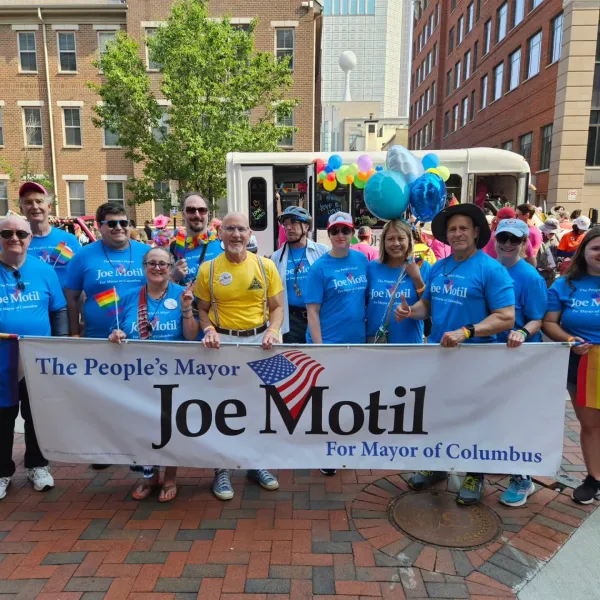
A report by WSYX-Channel 6 TV reporter Darrel Rowland with the title, “Ohio Issue 1 latest example of sliding government accountability, transparency” was published on social media today. Among other things, Rowland wrote, “A 6 On Your Side analysis shows that government accountability and transparency have been crumbling in Ohio for some time.”
The article refers to Gov. Mike DeWine’s refusal to debate Democratic challenger Nan Whaley in last year’s Ohio gubernatorial race. DeWine also rejected numerous interviews from media across the state of Ohio.
Rowland’s story also touches on one-party rule not only on the state-level but the “lack of accountability at the local level in the city of Columbus.”
He writes, “In places like Columbus, where Democrats dominate, incumbents often won’t debate or engage with lesser-known Republican opponents…For example, the campaign spokesman for Mayor Andrew Ginther would not commit to a debate with the Democrat’s GOP challenger this year.”
Reproductive Rights is just one citizen amendment in the crosshairs of Issue 1

The freedom of reproductive choice in Ohio. Legalizing recreational marijuana in Ohio. Ending Qualified Immunity in Ohio.
Those are all citizen-led ballot initiatives currently seeking to amend the Ohio constitution, and one initiative that may someday be jumpstarted by (progressive) Ohioans is ending the sales of Army and mass shooter guns.
As many know, the GOP-besieged Statehouse is trying to stop these citizen initiatives with Issue 1, which will be put to a statewide vote in August. If Issue 1 passes a 60 percent supermajority will be needed to change the Ohio constitution instead of a simple majority rule of 50 percent (among other changes making it more difficult to get a citizen initiative on a ballot).
Ohio students hold funeral at Statehouse for higher education, rallying against SB83
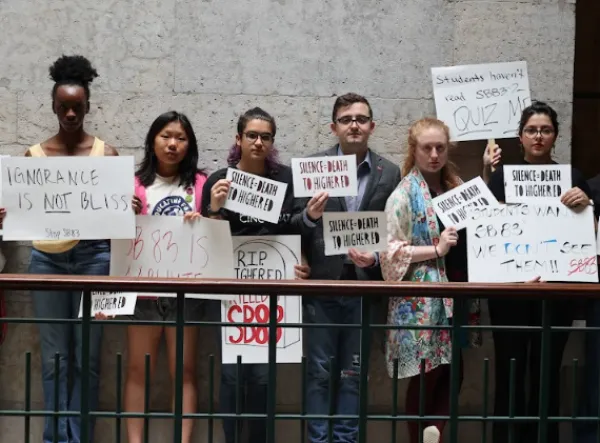
Today, students representing 10+ universities held a mock funeral for Ohio higher education in the face of continued efforts to pass SB83, best known as the Higher Education Destruction Act, bringing attention to how this dangerous legislation would cripple our education system and harm students.
Overwhelmingly, Ohio students have come out against SB83 and its companion bill HB151. If made into law, it would transform our higher education system for the worse, making it more costly, more restrictive, and less supportive for students. It attacks DEI (Diversity, Equity, & Inclusion) programs that help support underrepresented populations and would stifle academic freedom. An Ohio where SB83 becomes law is one where faculty must teach ‘both sides’ of climate change and universities can not do something as simple as take a stance on concepts as broad as “diversity” or “sustainability.”
Attorney General Yost denies the Ohio Coalition to End Qualified Immunity once again

Ohio Attorney General David Yost earlier this week rejected the Ohio Coalition to End Qualified Immunity’s (OCEQI) summary of petition yet again. This will be the fifth time the AG’s office has denied the OCEQI’s ballot language to amend the Ohio Constitution, but these activists are refusing to take ‘No’ for an answer. The OCEQI is re-starting signature gathering this weekend and their legal team has begun re-writing their amendment.
OCEQI spokesperson Cynthia Brown, who lost a nephew to Columbus police, says their Coalition partners – such as the Van Jones Institute for Justice and Campaign Zero – also remain determined to have Ohioans make their own decision at the ballot box to end Qualified Immunity.
“We strongly disagree with Dave Yost,” said Brown. “We can protest in the streets all we want, but if the laws are not on our side this will continue to happen.”
Attorney General Yost denies the Ohio Coalition to End Qualified Immunity once again
Ohio Attorney General David Yost earlier this week rejected the Ohio Coalition to End Qualified Immunity’s (OCEQI) summary of petition yet again. This will be the fifth time the AG’s office has denied the OCEQI’s ballot language to amend the Ohio Constitution, but these activists are refusing to take ‘No’ for an answer. The OCEQI is re-starting signature gathering this weekend and their legal team has begun re-writing their amendment.
OCEQI spokesperson Cynthia Brown, who lost a nephew to Columbus police, says their financial supporters – such as the Van Jones Institute for Justice – also remain determined to have Ohioans make their own decision at the ballot box to end Qualified Immunity.
“We strongly disagree with Dave Yost,” said Brown. “We can protest in the streets all we want, but if the laws are not on our side this will continue to happen.”
Dear Cameron Mitchell, stick to over-priced potato chips instead of squashing democracy
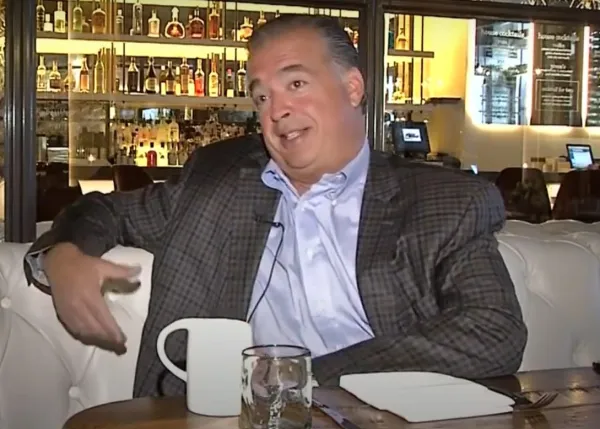
Everybody in town knows who Cameron Mitchell is and many have dined at his local establishments, such as Cap City Diner. His meteoric rise from dishwasher to nationally recognized restaurateur is also well-known. His restaurants, while pricey and bougee for some, have given Columbus a je ne sais quoi flavor (kinda).
Ask anyone who has worked in one of his kitchens or carried his golf clubs at a local country club and they’ll tell you he’s a down-to-earth guy. Cameron also has significant influence over Ohio’s restaurant scene. The Free Press heard he had a big say on re-opening protocols during the pandemic. His restaurant group, Cameron Mitchell Restaurants, sits on the Ohio Restaurant Association’s board, as does Wendy’s, White Castle and the ole’ Rusty Bucket, which Cameron is part owner.
Save Ohio Parks opposes oil and gas extraction on Ohio public lands

This week the window opened for oil and gas companies to submit nominations to the Oil and Gas Land Management Commission for parcels of Ohio public land – including our state parks, forests, and wildlife areas – to be leased for oil and gas extraction.
Even before today’s opening, out-of-state company Encino Energy submitted a proposal to the Ohio Department of Natural Resources, asking to build 14 fracking pads housing up to 89 frack wells around Salt Fork State Park.
Today the Ohio Oil and Gas Association called the opening of all of our taxpayer-owned public lands to oil and gas extraction a “ribbon-cutting” – as if our most treasured public lands are there for the industry to take what they want.
In response, Cathy Cowan Becker, an organizer with Save Ohio Parks, issued the following statement:
Mary Jane's Guide - JUST SAY NO! to ISSUE 1

“Power Corrupts. Absolute Power Corrupts Absolutely” ~ Lord Acton